
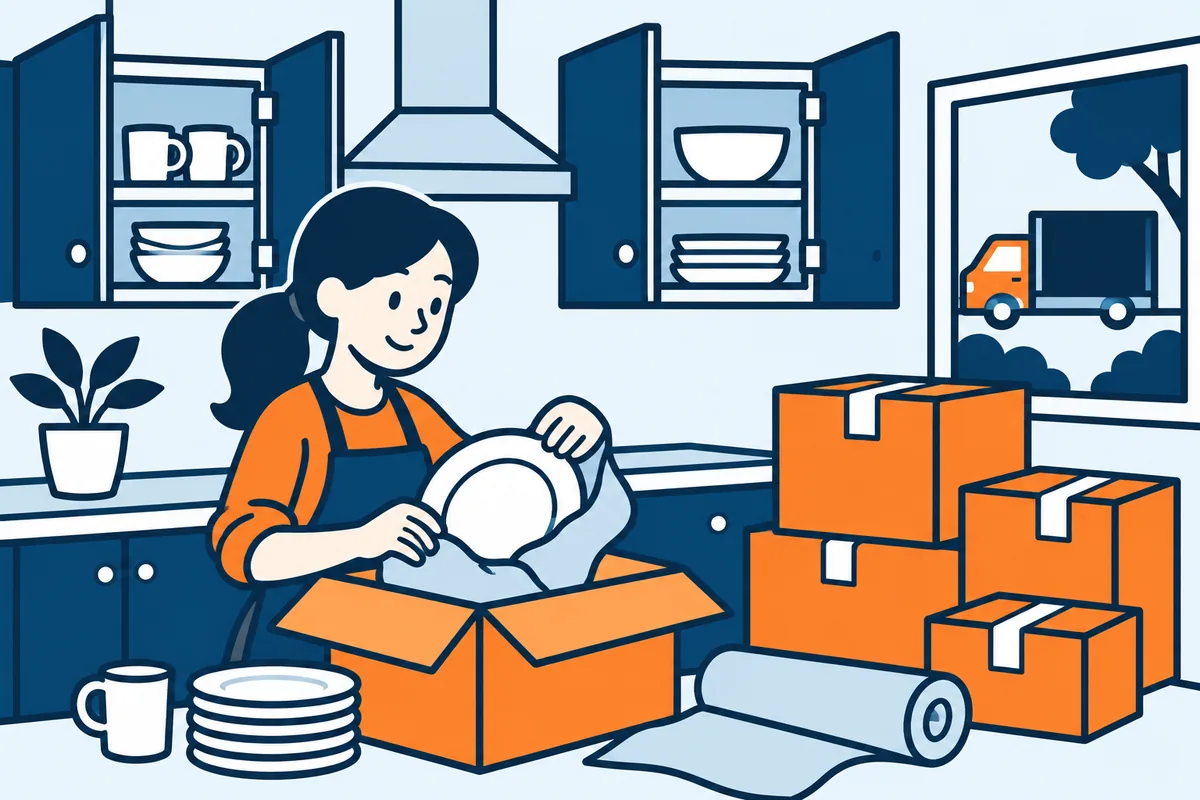
What is the first thing you need after moving into a new kitchen? That is your open-first box. The kitchen produces more boxes, more fragile items, and more packing time than any other room. It is also the first space you must make usable on move-in evening. With a room-by-room plan and the right supplies, it stops being the job you put off.
Start with the supplies
Before wrapping the first plate, assemble all your supplies. The kitchen demands more paper, bubble wrap, and boxes than any other room.
- Dish-pack boxes: double-walled cartons that keep plates from shifting
- Packing paper, plenty of it, for wrapping and filling gaps
- Bubble wrap for anything that would shatter: glasses, bowls, and heirlooms.
- Small and medium boxes, since large ones become too heavy with dishes
- Tape, markers and a pad of labels
The order that works
Pack by how soon you will need each item. The pieces you use least go in first, ride at the back of the truck, and come off last. Daily dishes and the items you reach for every morning go into the final boxes, so they are the first ones carried inside on move-in day.
- Week one: pack platters, special-occasion china, spare mugs, and seldom-used appliances.
- Week two: the pantry overflow, extra pots, storage containers, and their matching lids.
- Final days: pack the open-first box, label it on all six sides, and leave it where it can be loaded last. When the truck arrives at the new house, the crew pulls it out first, and you can open it before any other box.
How to wrap a dish
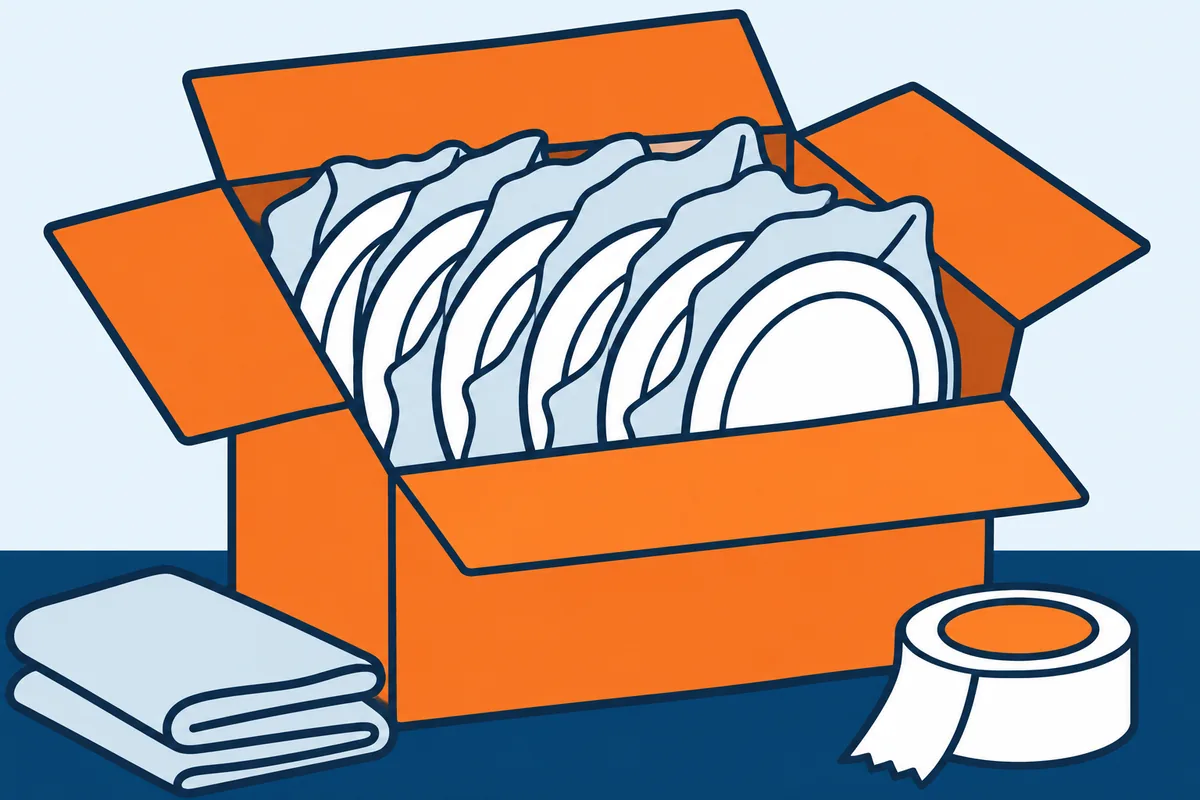
Wrap each plate individually: lay it on a sheet of paper, fold the corners over, and stand it upright on its edge, like a record in a collection, never flat. Use a dish-pack box to hold that vertical arrangement, with cushioning between layers so plates don’t touch. Glasses get their own wrap and go in upright, not on their sides. In every box, heavy items go to the bottom, lighter fragile ones on top, and fill the box completely so nothing shifts. That upright position also matters when the box goes up the steep stairs of a Covington row house, where a flat stack can crack. A box that shifts when you shake it is the box that breaks.
What travels in the open-first box
Put the items you will need before any other box is unpacked into the open-first box: the coffee maker, a kettle, mugs, utensils, and a few dishes. Add a dish towel, a small bottle of dish soap, and a sponge so you can wash the mugs before that first cup of coffee. Keep the box light enough to lift with one hand, because it will be the first thing set on the counter of the new kitchen.
What not to pack
Some things should not ride in a moving box. Perishable food gets eaten, given away, or tossed before moving day. Open liquids, aerosols, and cleaners travel in your car or stay out of the truck. If a particular item is questionable, mention it when you book.
Pack it yourself or hand it off
Two people usually take about half a day to pack a kitchen. If you finish before the crew arrives, you save crew hours on moving day. Prefer to hand it off? Request partial packing for the kitchen, electronics, or art. The extra supplies and time are listed in the written estimate, so you know the price before you book.